
Animations, movies and the video game industry have been significantly impacted by computer graphics development. There are several different image types: two-dimensional, pixel art, vector graphics, three-dimensional, and computer animation. There are also several different type of concepts and principles: pixel, graphics, rendering, volume rendering, and 3-D modeling.

Computer animation is one of the image types that is known by most people of this generation. One example of computer animation is motion capture. There are several released video games and movies that have been made with motion capture. With the power of computer graphics and 2-D/3-D graphics software, animation could be altered over a period of time.
In order for images to become what they are known to a majority of society, there are several concepts and principles that need to be applied.
What are some concepts and principles?
The concepts and principles of computer graphics are pixel, graphics, rendering, volume rendering and 3-D modeling.
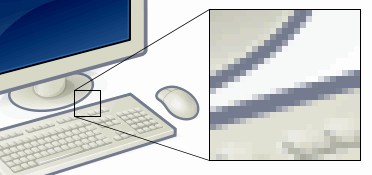
What is a pixel?
A pixel is a single point within an image. Pixels are normally placed on a two-dimensional grid as either dots or squares.
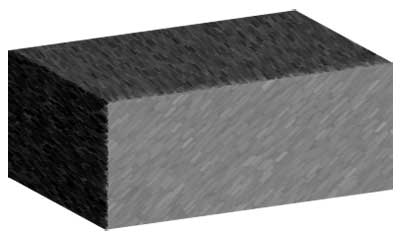
What is rendering?
Three-dimensional models generated by computer programs are known as rendering. There are several subcategories under rendering such as three-dimensional projection, ray racing, shading, texture mapping and anti-aliasing. All these are important factors of rendering.
Computer graphics have several fields of application such as computational biology, computational physics, computer-aided design, computer simulation, digital art, education, graphic design, info-graphics, information visualization, rational drug design, scientific visualization, video games, virtual reality and web site.
Reference:
http://www.graphics.cornell.edu/online/tutorial/
http://accad.osu.edu/~waynec/history/lessons.html
http://techtv.mit.edu/videos/10783-automatically-programmed-tools-1959-science-reporter-tv-series
http://www.math.yorku.ca/SCS/Gallery/milestone/milestone.pdf

No comments:
Post a Comment